Source: an adaptation from an Anthony de Mello story
Saturday, 9 March 2013
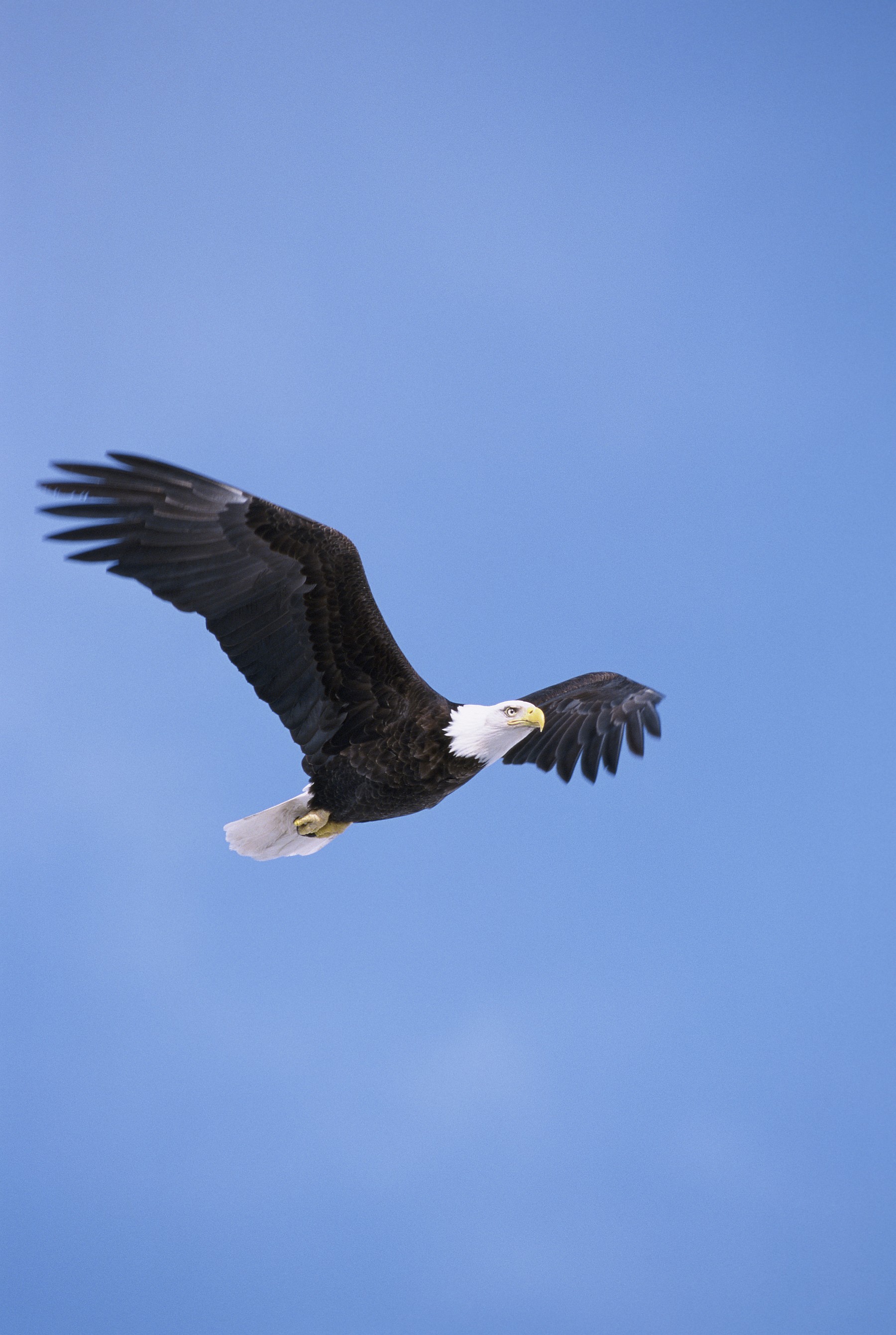
The Eagle Sky
Tuesday, 25 October 2011
LEARNING TO LIVE WITHOUT RECOGNITION IS A SKILL
There was a farmer who collected horses; he only needed one more breed to complete his collection. One day, he found out that his neighbor had the particular horse breed he needed. So, he constantly bothered his neighbor until he sold it to him. A month later, the horse became ill and he called the veterinarian, who said:
- Well, your horse has a virus. He must take this medicine for three days. I’ll come back on the 3rd day and if he’s not better, we’re going to have to put him down.
Nearby, the pig listened closely to their conversation.
The next day, they gave him the medicine and left. The pig approached the horse and said:
- Be strong, my friend. Get up or else they’re going to put you to sleep!
On the second day, they gave him the medicine and left. The pig came back and said:
- Come on buddy, get up or else you’re going to die! Come on, I’ll help you get up. Let’s go! One, two, three…
On the third day, they came to give him the medicine and the vet said:
- Unfortunately, we’re going to have to put him down tomorrow. Otherwise, the virus might spread and infect the other horses.
After they left, the pig approached the horse and said:
- Listen pal, it’s now or never! Get up, come on! Have courage! Come on! Get up! Get up! That’s it, slowly! Great! Come on, one, two, three… Good, good. Now faster, come on…. Fantastic! Run, run more! Yes! Yay! Yes! You did it, you’re a champion!!!
All of a sudden, the owner came back, saw the horse running in the field and began shouting:
- It’s a miracle! My horse is cured. This deserves a party. Let’s kill the pig!
Points for reflection: this often happens in the workplace. Nobody truly knows which employee actually deserves the merit of success, or who’s actually contributing the necessary support to make things happen.
- Well, your horse has a virus. He must take this medicine for three days. I’ll come back on the 3rd day and if he’s not better, we’re going to have to put him down.
Nearby, the pig listened closely to their conversation.
The next day, they gave him the medicine and left. The pig approached the horse and said:
- Be strong, my friend. Get up or else they’re going to put you to sleep!
On the second day, they gave him the medicine and left. The pig came back and said:
- Come on buddy, get up or else you’re going to die! Come on, I’ll help you get up. Let’s go! One, two, three…
On the third day, they came to give him the medicine and the vet said:
- Unfortunately, we’re going to have to put him down tomorrow. Otherwise, the virus might spread and infect the other horses.
After they left, the pig approached the horse and said:
- Listen pal, it’s now or never! Get up, come on! Have courage! Come on! Get up! Get up! That’s it, slowly! Great! Come on, one, two, three… Good, good. Now faster, come on…. Fantastic! Run, run more! Yes! Yay! Yes! You did it, you’re a champion!!!
All of a sudden, the owner came back, saw the horse running in the field and began shouting:
- It’s a miracle! My horse is cured. This deserves a party. Let’s kill the pig!
Points for reflection: this often happens in the workplace. Nobody truly knows which employee actually deserves the merit of success, or who’s actually contributing the necessary support to make things happen.
LEARNING TO LIVE WITHOUT RECOGNITION IS A SKILL!
If anyone ever tells you that your work is unprofessional, remember: amateurs built the Ark and professionals built the Titanic.
Monday, 31 January 2011
Insight into Decision Making - Good One
A group of children were playing near two railway tracks, one still in use while the other disused. Only one child played on the disused track, the rest on the operational track.The train is coming, and you are just beside the track interchange. You can make the train change its course to the disused track and save most of the kids. However, that would also mean the lone child playing by the disused track would be sacrificed. Or would you rather let the train go its way? Let's take a pause to think what kind of decision we could make........
....... *
!
!
!*
Scroll down
*
Most people might choose to divert the course of the train, and sacrifice only one child. You might think the same way, I guess. Exactly, to save most of the children at the expense of only one child was rational decision most people would make, morally and emotionally. But, have you ever thought that the child choosing to play on the disused track had in fact made the right decision to play at a safe place?
Nevertheless, he had to be sacrificed because of his ignorant friends who chose to play where the danger was. This kind of dilemma happens around us everyday. In the office, community, in politics and especially in a democratic society, the minority is often sacrificed for the interest of the majority, no matter how foolish or ignorant the majority are, and how far-sighted and knowledgeable the minority are. The child who chose not to play with the rest on the operational track was sidelined. And in the case he was sacrificed, no one would shed a tear for him.
The great critic Leo Velski Julian who told the story said he would not try to change the course of the train because he believed that the kids playing on the operational track should have known very well that track
was still in use, and that they should have run away if they heard the train's sirens.. If the train was diverted, that lone child would definitely die because he never thought the train could come over to that track! Moreover, that track was not in use probably because it was not safe. If the train was diverted to the track, we could put the lives of all passengers on board at stake! And in your attempt to save a few kids by sacrificing one child, you might end up sacrificing hundreds of people to save these few kids.
While we are all aware that life is full of tough decisions that need to be made, we may not realize that hasty decisions may not always be the right one. *
'Remember that what's right isn't always popular... and what's popular isn't always right.'
Saturday, 29 January 2011
MANAGEMENT LESSONS...
Story # 1
It's a fine sunny day in the forest and a lion is sitting outside his cave, lying lazily in the sun. Along comes a fox, out on a walk.
Fox: "Do you know the time, because my watch is broken"
Lion: "Oh, I can easily fix the watch for you"
Fox: "Hmm... But it's a very complicated mechanism, and your big claws will only destroy it even more."
Lion: "Oh no, give it to me, and it will be fixed"
Fox: "That's ridiculous! Any fool knows that lazy lions with great claws cannot fix complicated watches"
Lion: "Sure they do, give it to me and it will be fixed"
The lion disappears into his cave, and after a while he comes back with the watch which is running perfectly. The fox is impressed, and the lion continues to lie lazily in the sun, looking very pleased with himself.
Soon a wolf comes along and stops to watch the lazy lion in the sun.
Wolf: "Can I come and watch TV tonight with you, because mine is broken"
Lion: "Oh, I can easily fix your TV for you"
Wolf: "You don't expect me to believe such rubbish, do you? There is no way that a lazy lion with big claws can fix a complicated TV.
Lion: "No problem. Do you want to try it?"
The lion goes into his cave, and after a while comes back with a perfectly fixed TV. The wolf goes away happily and amazed.
Scene : Inside the lion's cave. In one corner are half a dozen small and intelligent looking rabbits who are busily doing very complicated work with very detailed instruments. In the other corner lies a huge lion looking very pleased with himself.
Moral : IF YOU WANT TO KNOW WHY A MANAGER IS FAMOUS; LOOK AT THE WORK OF HIS SUBORDINATES.
Management Lesson in the context of the working world : IF YOU WANT TO KNOW WHY SOMEONE UNDESERVED IS PROMOTED; LOOK AT THE WORK OF HIS SUBORDINATES
Story # 2
It's a fine sunny day in the forest and a rabbit is sitting outside his burrow, tippy-tapping on his typewriter. Along comes a fox, out for a walk.
Fox: "What are you working on?"
Rabbit: "My thesis."
Fox: "Hmm... What is it about?"
Rabbit: "Oh, I'm writing about how rabbits eat foxes."
Fox: "That's ridiculous ! Any fool knows that rabbits don't eat foxes!
Rabbit: "Come with me and I'll show you!"
They both disappear into the rabbit's burrow. After few minutes, gnawing on a fox bone, the rabbit returns to his typewriter and resumes typing.
Soon a wolf comes along and stops to watch the hardworking rabbit.
Wolf: "What's that you are writing?"
Rabbit: "I'm doing a thesis on how rabbits eat wolves."
Wolf: "you don't expect to get such rubbish published, do you?"
Rabbit: "No problem. Do you want to see why?"
The rabbit and the wolf go into the burrow and again the rabbit returns by himself, after a few minutes, and goes back to typing.
Finally a bear comes along and asks, "What are you doing?
Rabbit: "I'm doing a thesis on how rabbits eat bears."
Bear: "Well that's absurd !"
Rabbit: "Come into my home and I'll show you"
Scene : As they enter the burrow, the rabbit introduces the bear to the lion.
Moral: IT DOESN'T MATTER HOW SILLY YOUR THESIS TOPIC IS; WHAT MATTERS IS WHOM YOU HAVE AS A SUPERVISOR.
Management Lesson in the context of the working world: IT DOESN'T MATTER HOW BAD YOUR PERFORMANCE IS; WHAT MATTERS IS WHETHER YOUR BOSS LIKES YOU OR NOT.
Winners Never Complain...

Mr. Vivek Pradhan was not a happy man. He was the project manager and still not entitled to air travel. It was not the prestige he sought, he had tried to reason with the admin person, it was the savings in time. He opened his case and took out the laptop, determined to put the time to some good use.
'Are you from the software industry sir,' the man beside him was staring appreciatively at the laptop.
Vivek glanced briefly and mumbled in affirmation, handling the laptop now with exaggerated care and importance as if it were an expensive car.
'You people have brought so much advancement to the country, Sir. Today everything is getting computerized.'
'Thanks,' smiled Vivek, turning around to give the man a look. He always found it difficult to resist appreciation.
'You people always amaze me,' the man continued, 'You sit in an office and write something on a computer and it does so many big things outside.'
Vivek smiled deprecatingly. Naiveness demanded reasoning not anger. 'It is not as simple as that, my friend. It is not just a question of writing a few lines. There is a lot of process that goes behind it.' 'It is complex, very complex.'
'It has to be. No wonder you people are so highly paid,' came the reply.
This was not turning out as Vivek had thought. A hint of belligerence crept into his so far affable, persuasive tone. ' Everyone just sees the money. No one sees the amount of hard work we have to put in.
'Let me give you an example. Take this train. The entire railway reservation system is computerized. You can book a train ticket between any two stations from any of the hundreds of computerized booking centers across the country. Thousands of transactions accessing a single database, at a time concurrently; data integrity, locking, data security. Do you understand the complexity in designing and coding such a system?'
The man was awestruck; quite like a child at a planetarium. 'You design and code such things'.
'I used to,' Vivek paused for effect, 'but now I am the project manager.'
'Oh!' sighed the man, as if the storm had passed over, 'so your life is easy now.'
This was like the last straw for Vivek. He retorted, 'Oh come on, does life ever get easy as you go up the ladder. Responsibility only brings more work..
Design and coding! That is the easier part. Now I do not do it, but I am responsible for it and believe me, that is far more stressful. My job is to get the work done in time and with the highest quality. To tell you about the pressures, there is the customer at one end, always changing his requirements, the user at the other, wanting something else, and your boss, always expecting you to have finished it yesterday.' 'My friend,' he concluded triumphantly, 'you don't know what it is to be in the Line of Fire'.
The man sat back in his chair, his eyes closed as if in realization. When he spoke after sometime, it was with a calm certainty that surprised Vivek.
'I know sir. I know what it is to be in the Line of Fire'. He was staring blankly, as if no passenger, no train existed, just a vast expanse of time.
'There were 30 of us when we were ordered to capture Point 4875 in the cover of the night. The enemy was firing from the top. There was no knowing where the next bullet was going to come from and for whom.In the morning when we finally hoisted the Tricolor at the top only 4 of us were alive.'
'You are a...?'
'I am Subhedar Sushant from the 13 J&K Rifles on duty at Peak 4875 in kargil. They tell me I have completed my term and can opt for a soft assignment. But, tell me sir, can one give up duty just because it makes life easier. On the dawn of that capture, one of my colleagues lay injured in the snow, open to enemy fire while we were hiding behind a bunker. It was my job to go and fetch that soldier to safety. But my captain sahib refused me permission and went ahead himself. He said that the first pledge he had taken as a Gentleman Cadet was to put the "Safety and Welfare of the Nation foremost followed by the Safety and Welfare of the Men" he commanded and his own personal safety came last, always and every time.' 'He was killed as he shielded and brought that injured soldier into the bunker. Every morning thereafter, as we stood guard, I could see him taking all those bullets, which were actually meant for me. I know sir. I know, what it is to be in the Line of Fire.'
Vivek looked at him in disbelief not sure of how to respond. Abruptly, he switched off the laptop. It seemed trivial, even insulting to edit a Word document in the presence of a man for whom valor and duty was a daily part of life; valor and sense of duty which he had so far attributed only to epical heroes. The train slowed down as it pulled into the station, and Subhedar Sushant picked up his bags to alight.
'It was nice meeting you sir.'
Vivek fumbled with the handshake. This hand had climbed mountains, pressed the trigger, and hoisted the tricolor. Suddenly, as if by impulse, he stood up at attention and his right hand went up in an impromptu salute. It was the least he felt he could do for the country.
PS: The incident he narrated during the capture of Peak 4875 is a true-life incident during the Kargil war. Capt. Batra sacrificed his life while trying to save one of the men he commanded, as victory was within sight. For this and various other acts of bravery, he was awarded Param Vir Chakra, the nation's highest military award, and after that as is known about this nation, all such sacrifices of our soldiers are conveniently forgotten and that's the saddest part.
Please live humbly, there are great people around us, let us learn, winners are .....
• too busy to be sad,
• too positive to be doubtful,
• too optimistic to be fearful
• and too determined to be defeated
• Self-trust is the first secret of success.
Subscribe to:
Posts (Atom)